
Spinal Muscular Atrophy (SMA)
Spinal Muscular Atrophy (SMA) is a rare, genetic neuromuscular disease in which the nerve cells (motor neurons) in the spinal cord and brainstem gradually degenerate and die.
These motor neurons normally send signals from the brain to the muscles to contract them. When they are lost, muscles become weak, thin, and unable to function properly.
It mainly affects voluntary muscles, especially those close to the trunk – the muscles of the hips, thighs, shoulders, and trunk itself. In more severe forms, muscles responsible for breathing and swallowing are also affected.
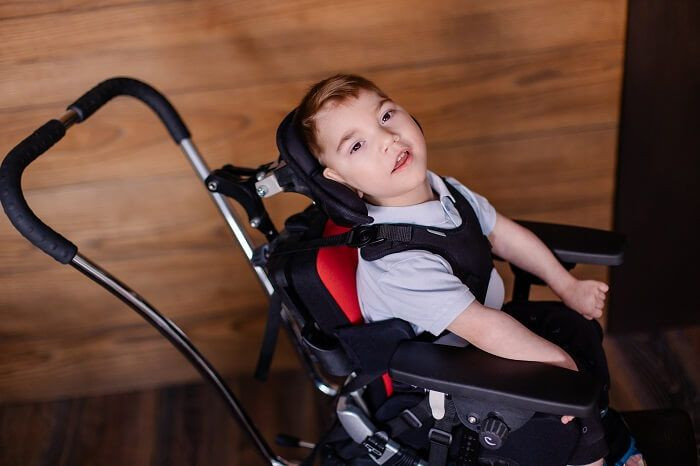
What causes Spinal Muscular Atrophy?
In most cases, SMA is caused by changes in the SMN1 gene (Survival Motor Neuron 1). This gene provides instructions for making the SMN protein, which is essential for the survival of motor neurons.
Because the disease is autosomal recessive:
- A child must inherit two non-working copies of SMN1 – one from each parent – to develop Spinal Muscular Atrophy.
- Parents usually carry one faulty and one normal copy of the gene and typically have no symptoms (they are “carriers”).
The SMN2 gene, a “backup” gene, can produce a small amount of SMN protein. The number of SMN2 copies often influences the severity of the disease:
- fewer SMN2 copies → more severe SMA,
- more SMN2 copies → generally milder forms.
Types and symptoms
Spinal Muscular Atrophy Disease is usually divided into several types based on age at onset and maximum motor function achieved.
SMA type 0 (prenatal)
- Very rare, starts before birth
- Decreased fetal movements were noted in pregnancy
- Severe muscle weakness at birth, often with respiratory failure
- Life-threatening course, usually in the neonatal period
SMA type I (Werdnig–Hoffmann disease)
- Onset: typically before 6 months of age
- Infants often appear “floppy” (hypotonic)
- Difficulty lifting the head, rolling over, or sitting unsupported
- Weak cough, weak cry, problems with swallowing and feeding
- Breathing difficulties due to weakness of the respiratory muscles and the chest wall
- Without treatment, historically associated with a very limited life expectancy
SMA type II
- Onset: 6–18 months
- Children can sit without support, but usually never learn to walk independently
- Progressive weakness in legs and trunk, later also in arms
- Tremor of the hands (fine tremor of fingers) is common
- Risk of scoliosis, hip dislocation, and contractures
- Respiratory muscle weakness may lead to nocturnal hypoventilation and recurrent chest infections
SMA type III (Kugelberg–Welander disease)
- Onset: in childhood or adolescence
- Children usually learn to walk, but may lose that ability later in life
- Difficulty running, climbing stairs, or standing up from the floor or a low chair
- Frequent falls, muscle fatigue
- Weakness predominantly in proximal leg muscles, later also in arms
- Life expectancy is often near normal, but with varying degrees of disability
SMA type IV (adult-onset)
- Onset: adulthood, typically after 18–21 years
- Slowly progressive, mild to moderate muscle weakness (mainly proximal muscles)
- Usually no major respiratory or swallowing problems
- Life expectancy is generally normal
How common is SMA?
Since Spinal Muscular Atrophy is a rare disease, its prevalence is lower compared to other, more common, diseases. Overall estimates vary by country, but roughly:
- Around 1 in 6,000–10,000 live births are affected
- Carrier frequency (people who have one faulty SMN1 copy but are healthy) may be around 1 in 40–60 in many populations
Because disease-modifying treatments are now available, early recognition is becoming increasingly important.
Newborn Screening
Several countries have already implemented national or near-universal newborn screening programs for Spinal Muscular Atrophy:
- United States: Approximately 99% of newborns are screened. The program has been implemented in 48 states and Washington, D.C. since 2018.
- Canada: Around 72% of newborns are screened, driven primarily by strong provincial programs in Ontario, British Columbia, and Alberta.
- Taiwan: Routine screening is offered to all newborns following successful pilot programs.
- Qatar: Nationwide newborn screening has been in place for all newborns since approximately 2021.
While others are currently testing, expanding, or regionalizing their screening initiatives:
- Australia: Pilot programs in New South Wales (NSW) and the Australian Capital Territory (ACT), covering a significant proportion of births.
- Germany, Belgium, Italy, Japan: Active pilot programs or ongoing expansion of existing screening efforts.
- Brazil: National legislation approved; pilot programs are currently underway.
- Poland, Austria, Czech Republic, Hungary, Portugal, Slovenia, United Kingdom: Active or newly launched pilot programs, often at the regional level.
- Turkey: A nationwide newborn screening program was launched in 2022.
Diagnosis of Spinal Muscular Atrophy
Doctors may suspect the disease when a child or adult presents with:
- Progressive muscle weakness, especially of the legs and hips
- Reduced or absent tendon reflexes
- Hypotonia in infants (“floppy baby”)
- Delayed motor milestones or loss of previously acquired skills
Key diagnostic steps include:
- Detailed clinical examination and family history
- Genetic testing – detection of SMN1 gene deletion/mutation (this is the standard confirmatory test)
- In some cases:
- Electromyography (EMG) and nerve conduction studies,
- Muscle ultrasound or MRI,
- Muscle biopsy (now rarely needed, as genetic testing is usually sufficient).
Treatment and prognosis
Spinal Muscular Atrophy used to be considered an untreatable, relentlessly progressive condition. Today, there are disease-modifying therapies that can significantly change the course of the disease, especially if started early.
Disease-modifying treatments (examples)
Depending on local approvals and availability, treatment options may include:
- Antisense oligonucleotide therapy modifies SMN2 splicing to increase SMN protein production.
- Gene replacement therapy delivers a functional copy of the SMN1 gene using a viral vector.
- Oral SMN2-modifying drugs also aimed at boosting SMN protein from the SMN2 gene.
These therapies do not “cure” SMA but can stabilize or improve motor function, particularly when started as early as possible, sometimes before symptoms develop (presymptomatic treatment in screened infants).
Supportive and multidisciplinary care
Even with modern therapies, comprehensive supportive care remains essential:
- Physiotherapy and occupational therapy to maintain mobility, prevent contractures, and support daily functioning
- Respiratory care, monitoring breathing, cough-assist devices, and non-invasive ventilation when needed
- Nutritional support, managing feeding difficulties, and preventing undernutrition or aspiration
- Orthopaedic care to manage scoliosis, hip problems, and contractures
- Psychological and social support for patients and families
Outlook
The prognosis in Spinal Muscular Atrophy varies widely and depends on:
- Disease type,
- Age at symptom onset,
- Timing and response to treatment,
- and the quality of long-term multidisciplinary care.
With early diagnosis and modern therapies, many children with SMA now achieve developmental milestones that were previously not expected, and survival and quality of life have improved substantially.
References: